Newsletter Subscribe
Enter your email address below and subscribe to our newsletter

 ByJohn A
Businesses in Chicago manage large amounts of digital information every day. Customer records, financial documents, employee information, business plans, and confidential communications may all be stored on hard drives. When these devices reach the end of their useful life, simply deleting files or throwing the drives away may not provide sufficient protection. Hard drive shredding in Chicago offers a physical data destruction method designed to make information stored on retired hard drives extremely difficult to recover.
Secure destruction is an important part of responsible data management. Businesses need to consider what happens to information when hardware is no longer needed, not just how it is protected while actively being used.
Hard drives can contain information long after a computer or server has been retired. Removing a device from service does not automatically remove the data stored on it.
See also: How Customer Journey Mapping and Loyalty Analytics Improve Customer Engagement in the UAE
Deleting a file does not necessarily destroy the underlying information. Depending on the drive and deletion method, specialised recovery techniques may potentially retrieve information that appears to have been removed.
This is why businesses should consider secure data destruction when disposing of storage devices containing confidential information.
See also: Choosing the Right Fragrance Partner for Your Business
A retired hard drive may contain years of business data. It could include customer databases, invoices, employee records, emails, credentials, project documents, and other internal files.
Even if the drive is no longer connected to a computer, the information stored on it may still have value to an unauthorised person.
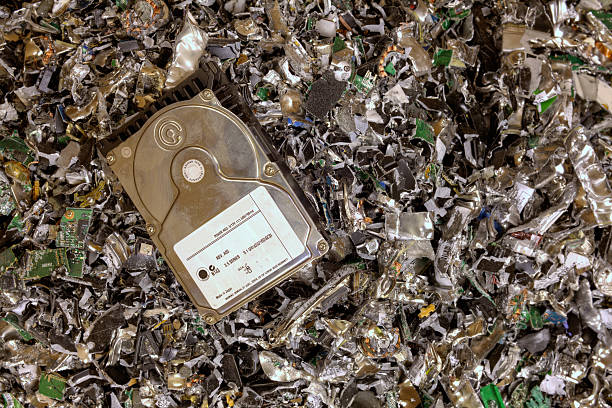
Hard drive shredding is a physical destruction process that breaks a storage device into small pieces or otherwise damages its storage components so that the information cannot be practically accessed through normal means.
Unlike simple file deletion, shredding focuses on physically destroying the storage media.
A hard drive contains internal components that store digital information. Professional shredding equipment is designed to physically break down these components.
Once a drive has been properly shredded, reconstructing the original storage device becomes extremely difficult, reducing the possibility of recovering the information it contained.
Businesses may have different storage technologies in their IT equipment. Traditional hard disk drives, external drives, and other storage media may require different handling methods.
Before destruction, organisations should identify the types of devices involved and ensure that the selected destruction process is appropriate for them.
Physical destruction can provide an additional layer of protection when sensitive information no longer needs to be retained.
One of the main purposes of hard drive shredding is to prevent unwanted recovery of stored information. When the physical storage media is destroyed, recovering complete files becomes significantly more difficult than attempting to retrieve deleted information from an intact drive.
This makes physical destruction useful for organisations dealing with particularly sensitive information.
An intact discarded drive may potentially be connected to another system and examined. Shredded storage media is no longer available in its original usable form.
This can help reduce the risk associated with retired equipment being misplaced, stolen, or accessed after disposal.
Businesses should consider all categories of information that may be stored on retired drives.
Customer records can include names, contact details, account information, transaction records, and other confidential details. Protecting this information should remain a priority throughout its lifecycle.
Secure destruction can help prevent customer information from remaining accessible after a storage device has been retired.
Employee-related information may include payroll records, identification details, employment documents, and internal communications.
When computers or servers containing this information are replaced, businesses should ensure that their storage devices are handled according to established data security procedures.
Companies also store confidential operational and financial information. Budgets, contracts, strategic documents, intellectual property, and internal reports can be valuable even when they are no longer actively used.
Secure hard drive destruction can help prevent these documents from being recovered from discarded equipment.
Data security does not end when information is no longer actively used. Businesses should consider security throughout the complete data lifecycle.
Information may be created, stored, accessed, shared, archived, and eventually removed. Each stage presents different security considerations.
When information reaches the end of its retention period, the organisation should have a defined process for disposing of the storage media that contains it.
A data retention policy may specify when information should be removed, while an IT asset disposal procedure can explain what happens to the physical equipment.
Combining these processes helps businesses avoid situations where old devices remain in storage without clear ownership or security controls.
Businesses can take several steps to make the destruction process more organised.
Maintaining an inventory of retired equipment can help businesses identify which hard drives need to be destroyed. Devices should be tracked from retirement through final destruction where practical.
This can reduce the chance of a drive being accidentally reused, misplaced, or disposed of through an unsuitable method.
Before destroying a hard drive, businesses should confirm that the information is no longer required. Some records may need to be retained for operational, legal, financial, or regulatory reasons.
Destruction should take place only after applicable retention requirements have been reviewed.
Hard drives awaiting destruction should be kept in a controlled location with restricted access. This reduces the opportunity for someone to remove or examine a device before the destruction process occurs.
Documentation can provide greater visibility into how retired storage devices are handled.
Businesses may record details such as the number of drives, device identification information, collection dates, and destruction dates.
Maintaining these records can help organisations demonstrate that devices were processed according to their internal procedures.
A controlled chain of custody can help establish who was responsible for the equipment at different stages. This is particularly useful when multiple departments or locations are involved in hardware disposal.
Clear records can also make internal security reviews more straightforward.
Data security is one part of responsible hardware disposal. Environmental considerations also matter when dealing with retired IT equipment.
Once hard drives have been physically destroyed, the resulting materials may be suitable for processing through appropriate electronic recycling channels.
Responsible recycling can help recover materials and reduce the amount of electronic waste sent to general landfill.
Businesses do not necessarily need to choose between data security and responsible recycling. A structured process can address both by ensuring that sensitive information is securely destroyed before eligible materials are processed.
The appropriate destruction method depends on the type of information, device, and organisational requirements.
When desktop computers and laptops are replaced, their internal hard drives may still contain business information. Secure destruction should be considered before the equipment leaves the organisation’s control.
Servers and storage systems can contain large volumes of information. When these systems are decommissioned, businesses should identify all storage media and determine how each device should be handled.
A damaged drive may not operate normally, but that does not necessarily mean its stored information is inaccessible. Physical destruction can be considered when secure sanitisation cannot reliably remove the data.
Protecting business information requires attention throughout the entire data lifecycle. Retired hard drives can continue to contain sensitive information even after files have been deleted or equipment has been removed from service. Hard drive shredding in Chicago provides a physical approach to data destruction by breaking down storage devices and reducing the possibility of information being recovered.
A well-managed disposal process should include identifying retired drives, reviewing data retention requirements, securing equipment before destruction, documenting the process, and responsibly processing the resulting materials. By incorporating secure hardware destruction into broader data security procedures, businesses can reduce risks associated with unwanted storage devices and maintain better control over sensitive information.