Newsletter Subscribe
Enter your email address below and subscribe to our newsletter

 ByJohn A
Flat rooflights have become a popular feature in contemporary residential and commercial architecture. They provide natural daylight through the roof while maintaining a clean appearance that can complement modern buildings.
For customers planning a new extension, renovation, office upgrade, or commercial project, the ability to shop online flat rooflights provides an easy way to explore different sizes, designs, glazing specifications, and configurations.
Skylights Roof Lanterns provides roof glazing solutions designed to support different flat-roof applications.
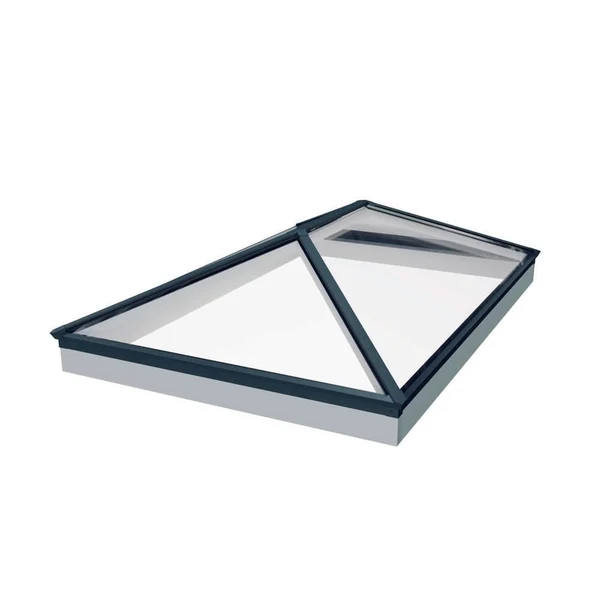
Flat rooflights are glazed units designed specifically for flat or low-pitched roofs. They are typically installed over a prepared opening and connected to a suitable kerb or upstand.
Unlike conventional windows, which are installed in walls, flat rooflights allow daylight to enter from above. This makes them particularly useful for rooms where wall space is limited.
Common applications include:
The main advantage is increased access to natural light. A rooflight can illuminate areas that may otherwise depend heavily on artificial lighting.
Flat glass rooflights can provide a minimalist aesthetic. Their relatively low profile can work well with contemporary architecture.
A flat roof is more than a protective surface. It can also provide an opportunity to introduce daylight into the building.
Flat rooflights are available in different dimensions and configurations, making them suitable for both small residential rooms and larger commercial spaces.
When you shop online flat rooflights, avoid selecting a product based only on size or price.
Start by confirming the roof type and structural opening. Then consider the following factors.
The rooflight needs to be appropriate for the room and structural opening.
A larger rooflight can provide more daylight but may also affect thermal performance and solar gain. The correct size should therefore be determined according to the building and room requirements.
Glazing has a major influence on thermal performance, daylight transmission, solar gain, and safety.
Options can include insulated double glazing, laminated safety glass, and solar-control glazing, depending on the product and project.
Fixed rooflights provide daylight without ventilation.
Opening rooflights can provide both daylight and airflow. These may be operated manually or electronically.
Frame materials and design influence the appearance, durability, and thermal performance of the rooflight.
The product must be compatible with the roof construction and waterproofing system.
Energy efficiency is increasingly important when specifying roof glazing.
A well-insulated rooflight can help reduce unwanted heat transfer. However, glazing can also introduce solar heat into a room, so both heat loss and solar gain should be considered.
Solar-control glass can help reduce excessive solar gain in appropriate applications, while low-emissivity glazing can improve thermal insulation.
The correct specification depends on the building’s orientation, local climate, roof area, room usage, and overall energy strategy.
Extensions are one of the most common applications for flat rooflights.
A kitchen extension, for example, may have large glazed doors at the rear but still require additional daylight toward the centre of the room. A rooflight can provide overhead illumination and help create a brighter interior.
Flat rooflights can also be used in home offices, bathrooms, utility rooms, and garden rooms.
Commercial properties can use flat rooflights to improve daylight in offices, retail units, studios, workshops, and other spaces.
Large commercial areas may benefit from multiple rooflights distributed across the roof rather than one large opening.
The design should account for structural requirements, thermal performance, safety, maintenance, and the intended use of the space.
A quality flat rooflight should be considered as part of the complete roof system.
Regular inspection can help identify issues with seals, frames, flashing, membranes, or surrounding roof materials.
Keeping the glazing clean can also help maintain daylight transmission. The frequency of cleaning depends on the roof’s location, surrounding environment, and accessibility.
Natural light can have a significant effect on how an interior looks.
A room with overhead daylight can feel more spacious and visually connected to the outdoors. The position of the rooflight can also influence how light interacts with walls, floors, furniture, and architectural features.
For this reason, rooflight placement should ideally be considered during the design stage rather than added as an afterthought.
Skylights Roof Lanterns offers roof glazing options for customers working on residential and commercial projects.
When choosing a flat rooflight, customers should consider the complete specification rather than focusing on one feature. Size, glazing, thermal performance, appearance, safety, installation, and maintenance all contribute to the final result.
Before placing an order, create a checklist covering:
This approach can help reduce the risk of selecting a rooflight that does not match the project.
To shop online flat rooflights effectively, it is important to compare complete product specifications rather than simply looking for the lowest price.
A well-selected flat rooflight can combine natural daylight, contemporary styling, thermal performance, and practical functionality. Whether used in a home extension, office, garden room, or commercial property, the right rooflight can make a meaningful difference to the character and usability of the space.
With suitable planning, correct installation, and appropriate glazing, flat rooflights can provide a durable and stylish solution for modern flat-roof projects.